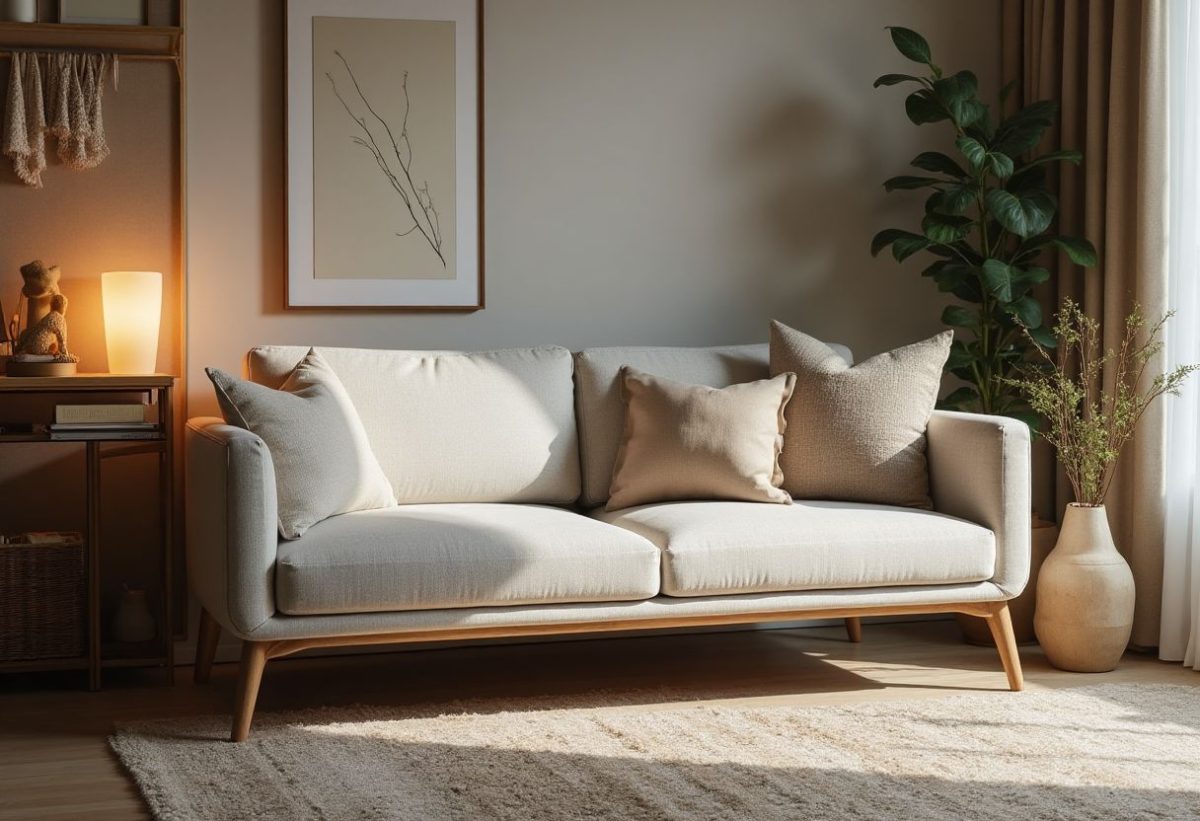
Emblem of domestic comfort, the sofa has traversed ages and trends, maintaining its status as the central element of the living room. Its presence in our homes is not limited to a simple piece of furniture. It witnesses our moments of relaxation, our intimate conversations, and our lively family gatherings. By tracing the history of the sofa, we discover how this piece of furniture has evolved to adapt to the styles and needs of each era.
The origins and evolution of the sofa
The history of the sofa dates back several centuries, even several millennia. Its genesis takes us on a fascinating journey through time.
- Antiquity: the first forms of sofas appear in ancient Egypt. Reserved for the elite, they are made of wood and precious fabrics.
- Middle Ages: the sofa becomes more functional, often rudimentary, primarily serving as a bench in the great halls of castles.
- Renaissance: with the emergence of the art of living, the sofa transforms into a more refined piece of furniture. It is adorned with sculptures and embroidery.
- Modern era: the sofa flourishes with the industrial revolution. Mass production allows for greater diversity of models and increased accessibility.
The different types of sofas
In the world of sofas, the diversity of models meets various needs and adapts to the spaces and tastes of everyone. There are numerous types of sofas that illustrate this diversity.
The corner sofa, for example, fits perfectly into large rooms, offering a generous and friendly seating area. As for the convertible sofa, it is the champion of versatility, transforming the living room into a guest room in the blink of an eye. The modular sofa appeals with its ability to reconfigure according to needs, adapting to changes in mood or room layout. Finally, the leather sofa, a symbol of timeless elegance, continues to charm with its durability and distinguished appearance.
Materials and modern innovations
The world of the sofa has seen the emergence of many materials and technologies that have revolutionized its design and comfort.
- Modern fabrics: the advent of synthetic fibers has allowed the creation of stain-resistant and easy-to-maintain fabrics, making sofa maintenance a less laborious task.
- Lightweight structures: with the development of materials like aluminum and composites, modern sofas are lighter, making them easier to move and rearrange.
- Integrated technology: some models now incorporate sound systems, USB charging ports, and even massage features, making the sofa a true center of entertainment and relaxation.
The sofa in popular culture
Beyond its primary function, the sofa holds a special place in our collective imagination and popular culture.
In cinema and television, the sofa often becomes a character in its own right, a silent witness and accomplice to human dramas and comedies. Iconic television series like Friends have elevated the sofa to a symbol of conviviality and camaraderie. In the artistic realm, photographers and painters have often used the sofa to symbolize intimacy, comfort, or even solitude. Moreover, contemporary designers continue to reinvent the sofa, making it a true work of art, blending functionality with sophisticated aesthetics.
The sofa is much more than just a piece of furniture. It reflects our era, witnesses our lives, and is a key element of our daily well-being. Throughout the centuries, it has managed to renew itself, adapt, and reinvent, asserting its indispensable role in our homes.