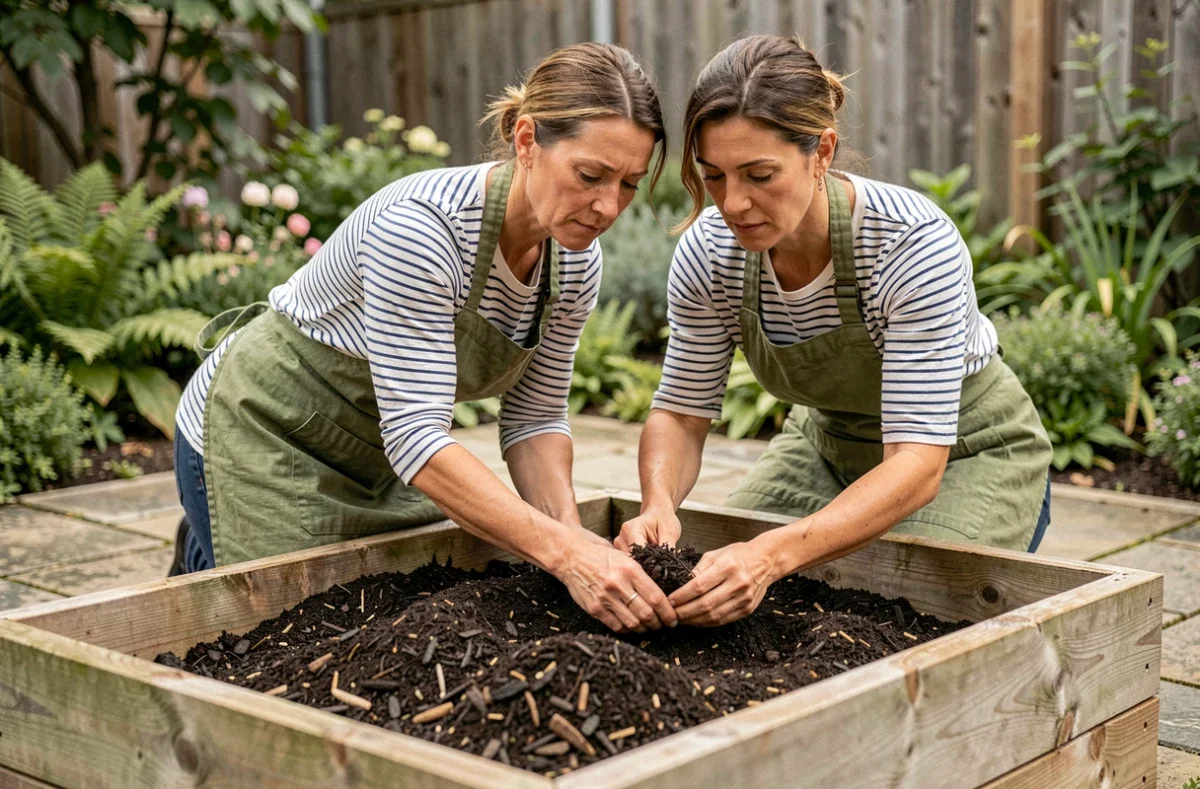
Filling a raised vegetable bed is not just about pouring potting soil into a wooden box. The substrate you compose determines water retention, nutrient availability, and the lifespan of the mix before compaction. This article compares the main filling methods, identifies at-risk materials, and details performance differences between a bed placed on natural soil and a closed box on a slab.
Lasagna method, soil-compost mix, or lightweight mineral filling: a comparison of approaches
Three strategies dominate for filling a raised vegetable bed. Their outcomes vary depending on the height of the box, the type of base, and the intended use.
| Criterion | Lasagna method (hügelkultur) | Soil-compost mix | Lightweight mineral filling |
|---|---|---|---|
| Suitable box height | More than 40 cm | Any height | Box on balcony or terrace |
| Type of base | Open (natural soil) | Open or closed | Closed with drainage holes |
| Compaction after one season | Marked (wood decomposition) | Moderate | Low |
| Initial nutrient richness | High to medium term | Immediate | Depends on added inputs |
| Risk of nitrogen hunger | High if excess carbon materials | Low | Negligible |
| Total weight | High | High | Reduced |
The lasagna method appeals with its recycling logic: logs, branches, green waste, and compost are stacked in successive layers. Find more gardening tips on La P’tite Graine to delve deeper into this layering technique.
The soil-compost mix remains the most straightforward solution. It is suitable for low-height boxes where space for stacking layers is limited. However, it assumes mature and quality compost, which is not always guaranteed.
Nitrogen hunger and residual herbicides: two pitfalls of organic filling
Using raw organic materials without caution exposes you to problems that commercial potting soil does not pose. Two risks deserve special attention.
Nitrogen hunger related to wood chips
An excess of carbon materials (shavings, chips, dry straw) in the upper layers mobilizes available nitrogen for decomposition at the expense of the roots. Balancing each carbon layer with a nitrogen input (mature compost, fresh green waste, grass clippings) limits this blockage.
The problem is especially critical in the first season. Nitrogen-hungry leafy vegetables (lettuce, spinach) show the first signs: yellowing of the lower leaves, slowed growth.
Persistent herbicides in manure and compost
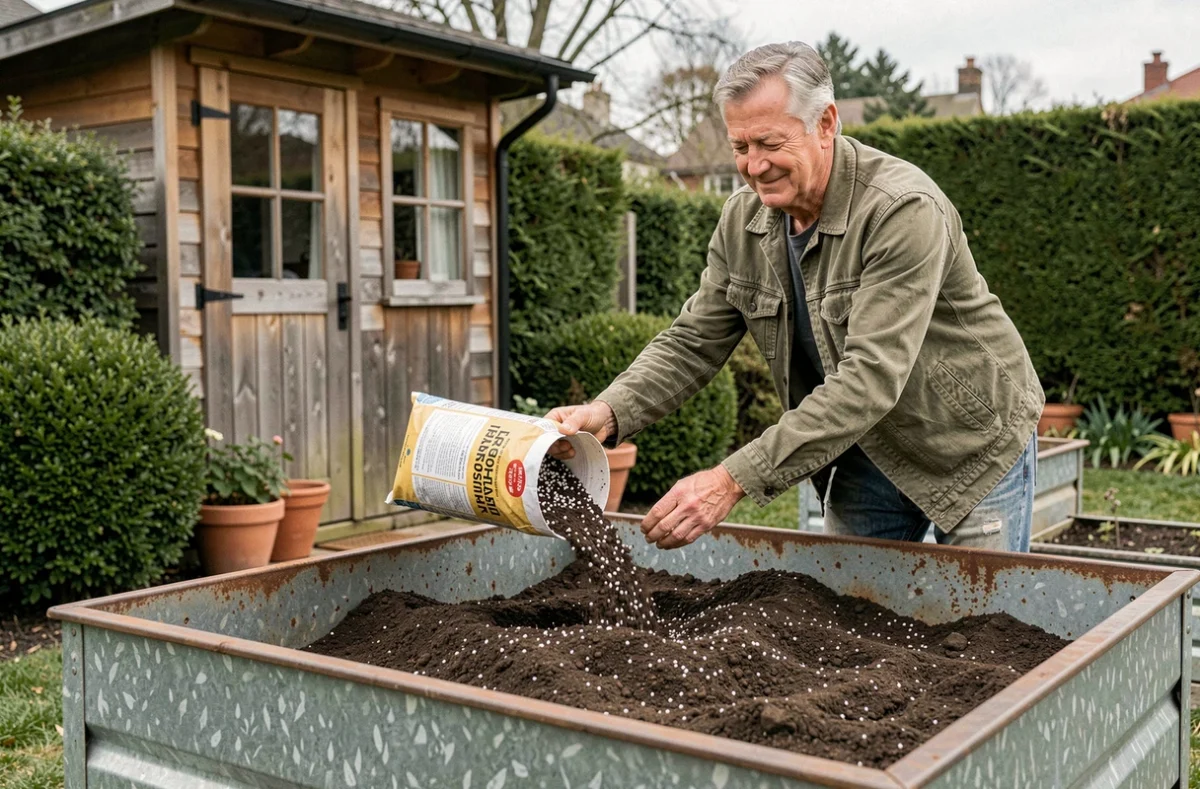
Some herbicides like aminopyralide resist composting. Manure or compost derived from treated hay can cause deformed leaves, twisted stems, or abnormal growth in tomatoes, beans, and other sensitive plants. A preliminary pot test with indicator plants (tomato or dwarf bean) can detect contamination before filling the entire box.
If in doubt about the source of the manure, it is better to forgo it than to compromise an entire growing season.
Raised vegetable bed on natural soil or closed box on terrace: drainage and weight constraints
The choice between open base and closed base radically changes the way to fill the box. Competitors often treat both cases as minor variations, while the constraints are fundamentally different.
On natural soil, a box with an open base benefits from continuity with the existing soil. Earthworms come up, drainage occurs naturally downward, and the total weight is not a structural problem. The bottom layer can accommodate logs or branches without concern.
On a balcony or terrace, the situation changes. Lightweight mineral solutions (perlite, expanded clay balls) become a priority to limit the load. Checking the load-bearing capacity of the slab before filling avoids costly surprises. Drainage is not just about placing a layer of gravel: the drainage holes of the box must be wide enough and clear so that water does not stagnate at the bottom.
- Open base on soil: favor the lasagna method or soil-compost mix, starting with coarse materials (branches, logs) to promote drainage and slow decomposition
- Closed base on slab: lighten with draining materials (clay balls, perlite) in the first third of the height, then complete with a richer substrate
- In both cases: never fill the box to the brim, as natural compaction after a few weeks of cultivation reduces the substrate level
Homemade compost in a vegetable bed: what Anses reports
Homemade compost is often presented as the ideal ingredient for filling a raised bed. This confidence deserves to be nuanced.
Anses warned, in an opinion published in October 2022, about so-called “biodegradable” or “compostable” bags: these bags can leave behind polymers, additives, or mineral fillers in home composters. For a bed intended for consumed vegetables, it is better not to incorporate these residues into the substrate.
Insufficiently mature compost, mixed directly with the roots of young plants, risks burning the root system due to excess heat or temporary acidity. Checking maturity before use remains a basic precaution.
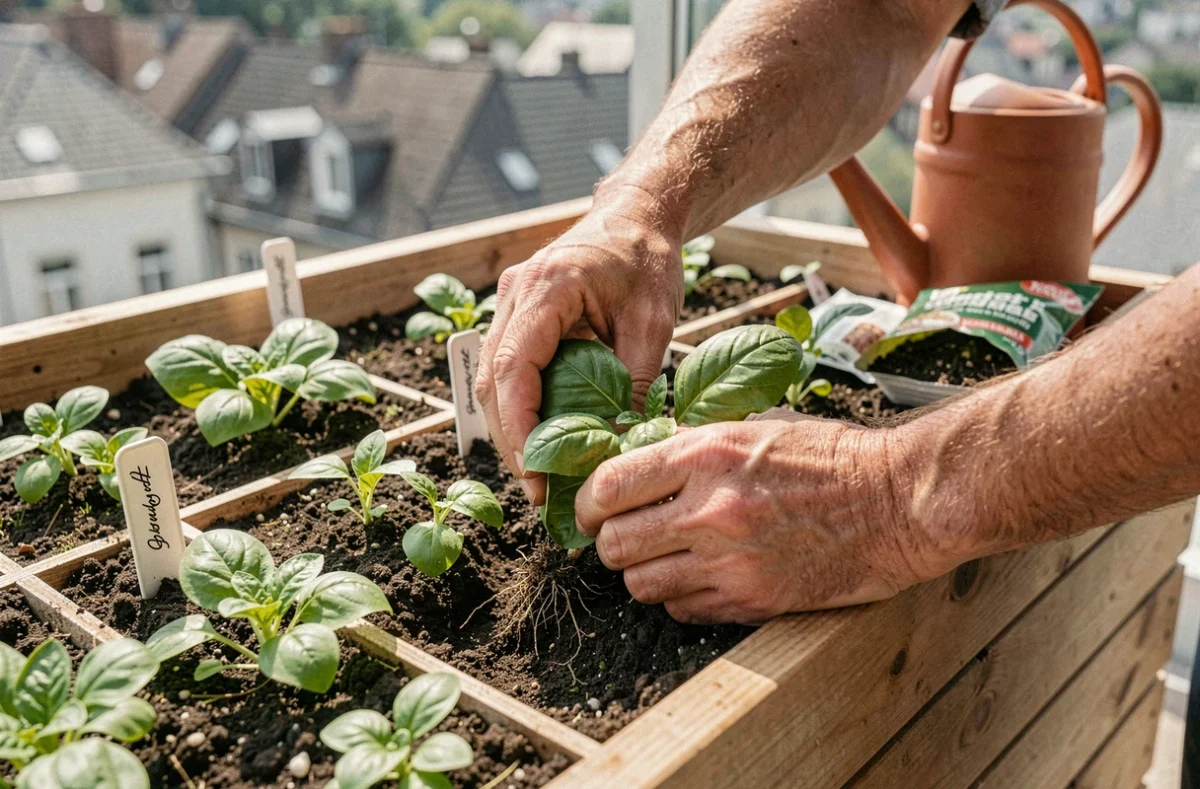
- Check that the compost is well decomposed: homogeneous texture, forest floor smell, absence of recognizable pieces
- Exclude any bag labeled “compostable” from the home composter intended for the vegetable garden
Substrate compaction after the first season is normal and does not indicate a problem. Adding a layer of mature compost and mulch each autumn maintains the level and fertility without having to empty the box. A well-filled bed from the start, with materials suited to its base type, produces from the first year if the carbon and nitrogen layers are correctly dosed.