In the face of environmental challenges and the growing need for energy efficiency, building insulation has become a major issue. Households are looking for solutions that combine thermal performance, environmental respect, and sustainable savings. In this quest for comfort and sustainability, one technique is emerging strongly as the most promising option: external insulation. This ingenious method not only preserves the interior aesthetics of homes but also ensures a reinforced thermal envelope. It stands out from other approaches by its ability to improve the energy efficiency of a building without reducing interior space.
The advantages of external insulation
Many benefits arise from adopting this technique, which is increasingly appealing to homeowners concerned about energy efficiency and environmental impact.
- Improvement of energy performance: By enveloping the building, external insulation reduces thermal bridges, those vulnerable areas through which heat escapes. This reinforcement contributes to a significant decrease in heating and cooling needs.
- Preservation of interior space: Unlike other methods, this approach does not decrease the living area, a considerable asset in confined spaces.
- Aesthetic enhancement: It allows for a fresh look for façades, thus providing aesthetic added value while increasing the property’s worth.
- Increased protection: By protecting the walls from the elements and climate variations, it extends the lifespan of the building and reduces maintenance costs.
The techniques used for external insulation
Adopting this method involves choosing from several techniques, each with its specificities and particularities.
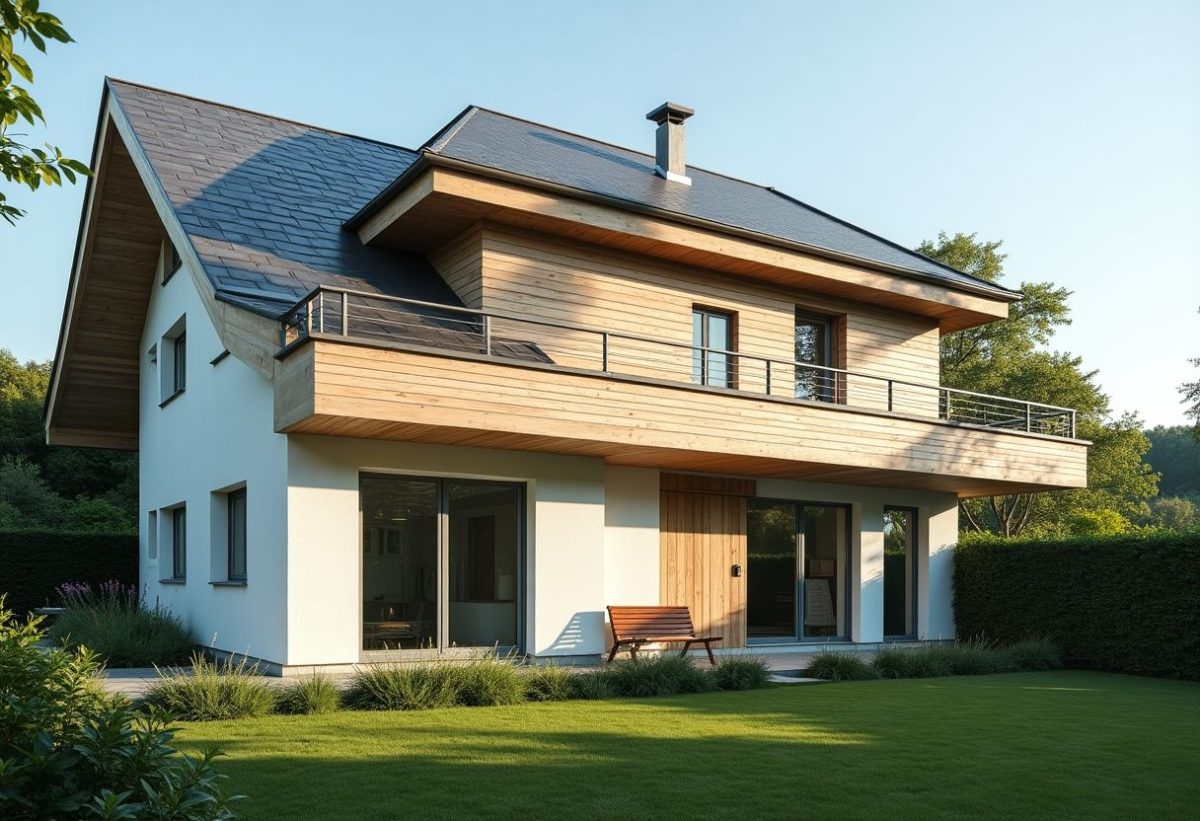
Ventilated cladding is a popular solution for its ability to combine thermal insulation and aesthetic finish. By installing a frame fixed to the façade, a ventilated space is created to avoid condensation problems, while offering flexibility in the choice of cladding materials.
Insulating render, on the other hand, involves applying a layer of insulation to the exterior walls before covering it all with a render. This system ensures continuity of insulation and uniform protection, while providing a neat and durable finish.
The materials used in external insulation
The effectiveness of external insulation largely depends on the materials chosen. These, varied and adapted to specific needs, play a crucial role in the overall performance of the insulation.
- Mineral wool: Used for its remarkable thermal and acoustic properties, it is also non-flammable, thus offering enhanced safety.
- Expanded polystyrene (EPS): This material is favored for its excellent quality-price ratio and light weight, making it easy to install on walls.
- Polyurethane: Highly efficient, it offers unmatched thermal insulation due to its low thermal conductivity, significantly reducing heat loss.
Financial and ecological considerations
Investing in external insulation represents a significant financial commitment, but the long-term benefits are numerous, particularly in terms of energy savings and environmental preservation.
Although the initial cost may seem high, external insulation offers a quick return on investment due to the notable reduction in energy bills. Moreover, this method meets the requirements of current thermal regulations, thus ensuring legal and ecological compliance.
From an environmental perspective, it contributes to the reduction of greenhouse gas emissions, a fundamental element in the fight against climate change. By opting for eco-friendly materials, it fully aligns with a sustainable development approach.