A discreet sign, an address whispered on the Internet, a façade that appears every evening on the screens of millions of fans: this oyster farm, a silent pillar of “Tomorrow is Ours,” has carved out a unique place in Mèze, far from being just a silhouette in the landscape of the Thau basin.
The oyster farm of Tomorrow is Ours: much more than just a backdrop
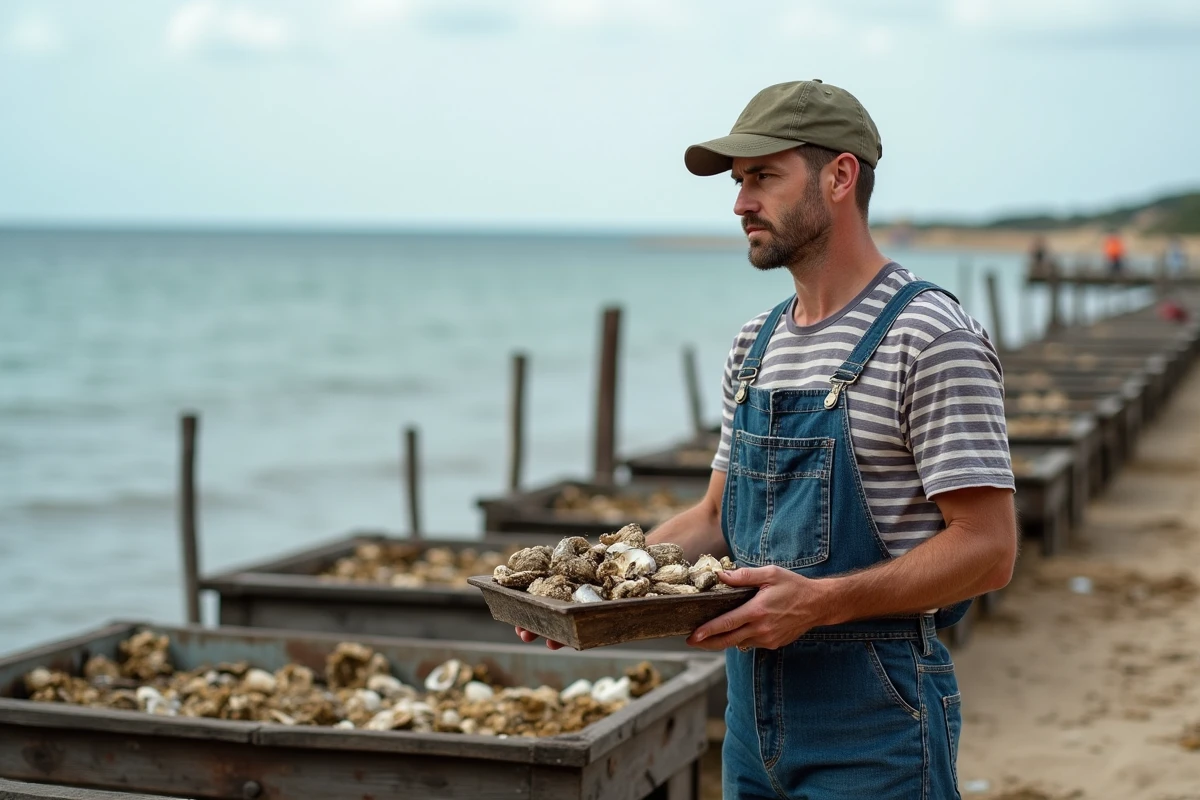
Located at 20 rue de Copenhague, facing the lagoon, the oyster farm of Tomorrow is Ours in Mèze occupies a central place in the series: it is here that the intrigues unfold, that families tear apart, and that the rhythm of daily life imposes itself sheltered from the huts and the lapping of the water. Alex (played by Alex Brasseur) and Judith (Alice Varela) live this demanding profession with a naturalness that resonates with all those who know the reality of the basin. The series pays attention to precise details: one captures the raw light of the lagoon, the rigor of a professional gesture, the palpable tension during intense moments.
The place attracts many curious visitors. Those who want to find this iconic setting, recognized by its familiar façade or simply feel the atmosphere of the site, flock to Mèze. The production, demanding in terms of authenticity, has not resorted to pretense: filming takes place in an active farm, and the fiction is anchored close to local reality. Between takes, the oyster farmers continue their work, sometimes exchanging glances with the filming crews. Slowly, the farm has established itself as a character in its own right, a symbol of a territory and a living memory of many episodes.
Why Mèze instead of Sète? A choice that makes sense
The series depicts Sète, a bustling and bright maritime city, but when it comes to showcasing the heart of oyster farming, it crosses the pond. In Mèze, the northern shore of the basin concentrates shellfish farming activity and offers a setting of rare credibility.
Here’s what convinced the creators of the series:
- The grandeur of the Thau basin, an open panorama that enriches every scene filmed on location.
- The presence of real farms, guarantees of a concrete immersion in the profession of oyster farming.
- The appearance of the farm, its typical architecture, perfectly in tune with the universe of the script.
Mèze charms with its sincerity and local dimension. This choice broadens perspectives, takes the series off the beaten path, and pays tribute to those who animate the region daily. Over the seasons, the team has drawn inspiration from these landscapes and local actors, while showcasing a less exposed facet of the Occitan coast.
The farm, the anchor point of the narrative, embodies this constant dialogue between fiction and reality. It not only adds depth to the story but also opens a window into the lives of the inhabitants of the Thau basin.
The address, access, and behind-the-scenes of the real oyster farm
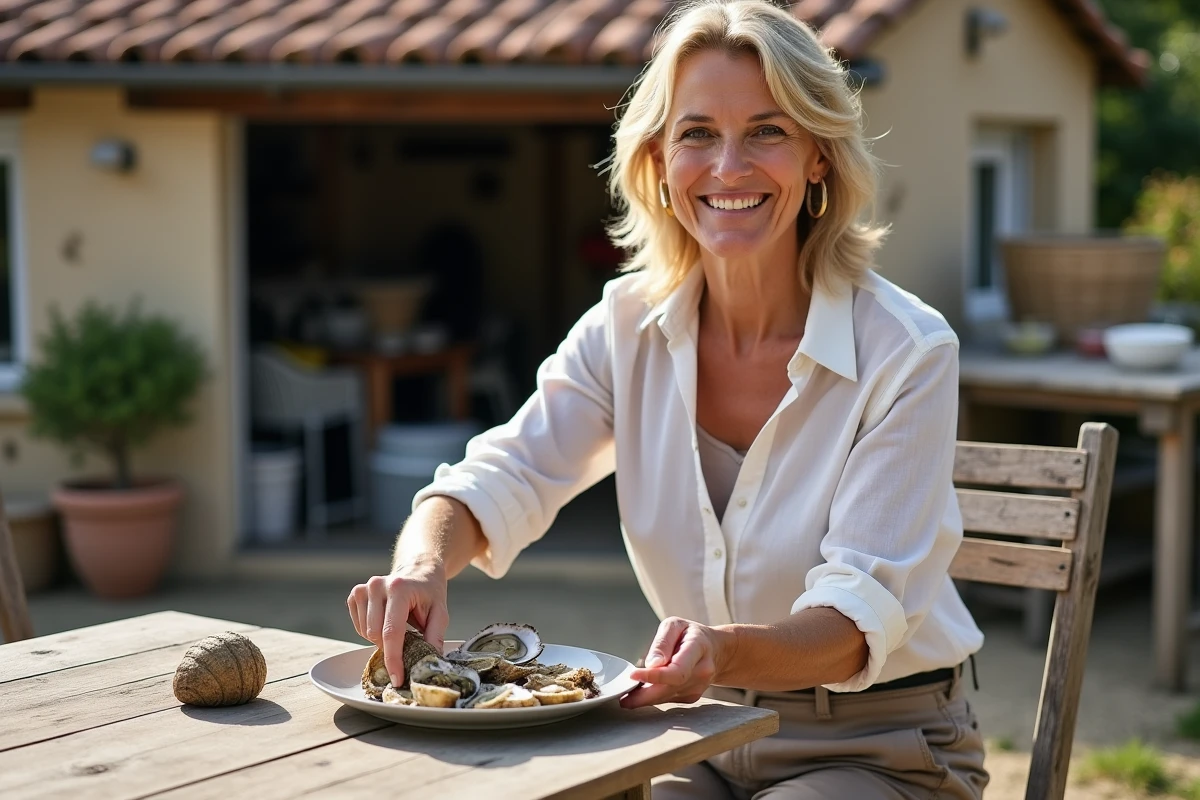
This emblematic farm indeed has a street address: 20 rue de Copenhague, in Mèze. No question of special effects or studio for every sequence. It exists, it produces, it welcomes, in the heart of a neighborhood dedicated to shellfish farming.
To get there, simply cross the center of Mèze, walk along the rows of huts, and breathe in the unique air of the lagoon. Here, there is no overplayed set: authenticity is evident on the walls, the morning light enhances every relief, and the reflections of the water give the scenes that extra soul that shines through on screen.
This place has seen many significant scenes filmed: quarrels, moments of complicity, instances of transmission between Alex and Judith, with fans lurking nearby. Not far away, you can also find Chloé Delcourt’s house, proving that this address holds far more secrets than one might think.
The interior scenes, on the other hand, originate from the avenue du Maréchal Juin, in a studio designed to match the ambiance of the farm. This setup ensures visual continuity and allows the team to adapt to the demands of a tight schedule. But for the series, the spirit of the basin remains unaltered: the reality of the site permeates every episode.
Ultimately, the oyster farm of Mèze is no longer just a shadow of fiction. It is now part of the regional landscape and the collective imagination, just like those places that end up transcending the series itself. It remains to be seen who, between the public or the cameras, will continue to push these doors behind which work, passion, and sometimes intrigue intertwine.