
Receiving rent by check means waiting for the mail, going to the bank, and then manually checking that the amount matches the lease. This routine weighs on both landlords and managers. Secure online payment applied to real estate transactions eliminates most of these steps while creating a usable record in case of disputes.
Legal Traceability of Online Real Estate Payments

Before even discussing comfort, the first question to ask is about proof. When a tenant disputes a delay or a landlord needs to justify a collection in court, a traditional bank statement is not always sufficient.
Online payment platforms dedicated to rental real estate generate a precise timestamp for each transaction. Each rent payment is recorded with the date, time, amount, and identity of the payer. This centralized history serves as admissible evidence in case of recovery proceedings.
For managers handling multiple properties, this traceability changes the game. No more Excel spreadsheets cross-referenced with bank statements: the tool automatically reconciles incoming flows with the expected due dates. When a payment is missing, the reminder is sent without human intervention.
Some managers looking to go further explore online payment on myfoncia.com my account to centralize the tracking of their rental due dates in a single dashboard.
Multichannel Payment Journey for Tenants and Landlords
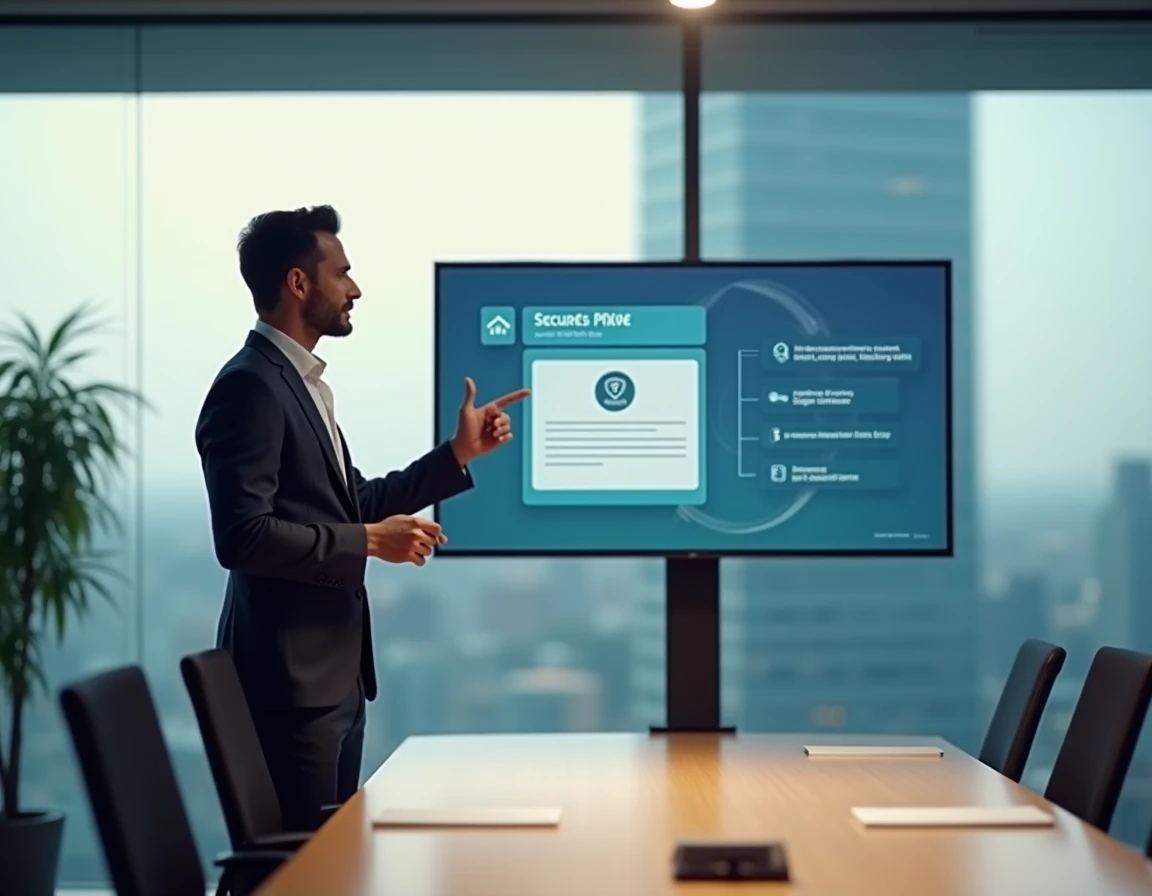
Have you noticed that a tenant who can pay however they want pays faster? This is the principle of the multichannel journey.
Recent solutions offer multiple payment methods within the same space: open banking transfer, credit card, SEPA direct debit, sometimes QR code. The tenant chooses according to their habits. The landlord, on the other hand, receives the funds in a single account, regardless of the channel used.
What Open Banking Transfer Changes
The open banking transfer differs from the traditional transfer in one specific way: the tenant does not need to manually enter the landlord’s IBAN. They click on a link, identify themselves with their bank, and validate. The risk of input error disappears, and the accounting reconciliation becomes automatic.
For landlords managing one or two properties without dedicated software, this mechanism reduces the risk of confusion among tenants. Each payment arrives pre-identified, linked to the correct lease.
Direct Debit Remains Relevant
SEPA direct debit retains a clear advantage for recurring rents: once the mandate is signed, the tenant has nothing more to do. The manager triggers the funds collection on a fixed date.
The limitation? A direct debit can be disputed by the debtor for eight weeks. That’s why some landlords combine direct debit with a timestamped history to have a double layer of proof.
Overall Security of Rental Income: Beyond a Simple Payment Tool
Installing an online payment button does not protect against unpaid rents. Experienced managers integrate this tool into a broader security strategy.
- Thorough selection of tenant files in advance, with verification of income and rental history, even before activating online payment.
- Taking out rental guarantee insurance (GLI), which covers the landlord even if the tenant stops paying after several months of regular payment.
- Inserting a solidarity clause in the lease for shared accommodations, so that each roommate remains liable for the total rent in case one of the occupants defaults.
- Setting up automatic reminders from the first day of delay, which reduces the average duration of unpaid rents before they become critical.
Secure online payment then becomes a link in a coherent chain, not an isolated solution.
Native Integration with Rental Management Software
Why does this criterion matter so much? Because a payment tool disconnected from the rest of management creates as much work as it eliminates.
Recent rental management software natively includes the payment module. In practice, when a tenant pays their rent, the amount is automatically reconciled with the corresponding rent call. The tenant account balance updates in real-time.
This automatic reconciliation eliminates the most time-consuming task of daily management: checking bank statements line by line. For a manager overseeing several dozen units, the time savings add up to hours each month.
Documents and Electronic Signature in the Same Space
Some platforms go further by combining payments, lease documents, and electronic signatures in a single portal. The tenant can view their receipts, sign an amendment, and pay their rent without changing applications.
This centralization also facilitates the digitalization of exchanges during an inventory or charge regularization. All data remains in a single secure environment, simplifying archiving and compliance.
Secure online payment applied to real estate transactions is not just about comfort. It structures proof in case of disputes, accelerates collections through multichannel options, and integrates into a rental income protection strategy. The most reliable selection criterion remains native integration with the management software: it determines whether the tool truly saves time or adds an additional layer to manage.