
As temperatures drop and days shorten, the call for comforting foods becomes apparent. Winter vegetables, with their rich flavors and varied textures, offer an incredible palette for culinary creations that are both indulgent and beneficial for health. From velvety butternut squash to robust kale, it’s important to master certain techniques to make the most of these treasures of the cold season. This is how simple products are transformed into exceptional dishes while preserving their essential nutritional qualities during this time when the body demands a significant energy and vitamin intake.
The secrets to perfect cooking to enhance winter vegetables
Mastering the cooking of winter vegetables is the cornerstone for creating dishes that are both tasty and comforting. Each vegetable, from root to leaf, has its own characteristics that call for appropriate cooking methods. The sweetness of parsnips is exalted in purée, while the robustness of rutabagas is tamed through slow, simmered cooking. Culinary tips help integrate more winter vegetables into the diet, transforming often-overlooked products into true stars of our plates. Think of microwaved endives for a quick and delicious preparation, or roasted pumpkins that concentrate their sweet aromas after a stint in the oven.
The use of peels, often neglected, is part of an approach that is both ecological and gastronomic. Vegetable peels, rich in nutrients, can be transformed into broth, chips, or added to soups for an unexpected flavor boost and a reduction in food waste. Similarly, vegetable tops, like those from carrots or radishes, can be reinvented into pesto or added to salads, providing a touch of freshness and crunch.
As for pumpkin seeds, often relegated to waste, they transform into a crunchy snack once roasted or into a crunchy element in your salad or homemade bread recipes. These tips for whole vegetable utilization open a wide range of culinary possibilities while maximizing nutritional benefits and respecting seasonality. Winter vegetables, available from December to February, lend themselves to a multitude of preparations, from the simplest to the most elaborate, to face the cold with indulgence and well-being.
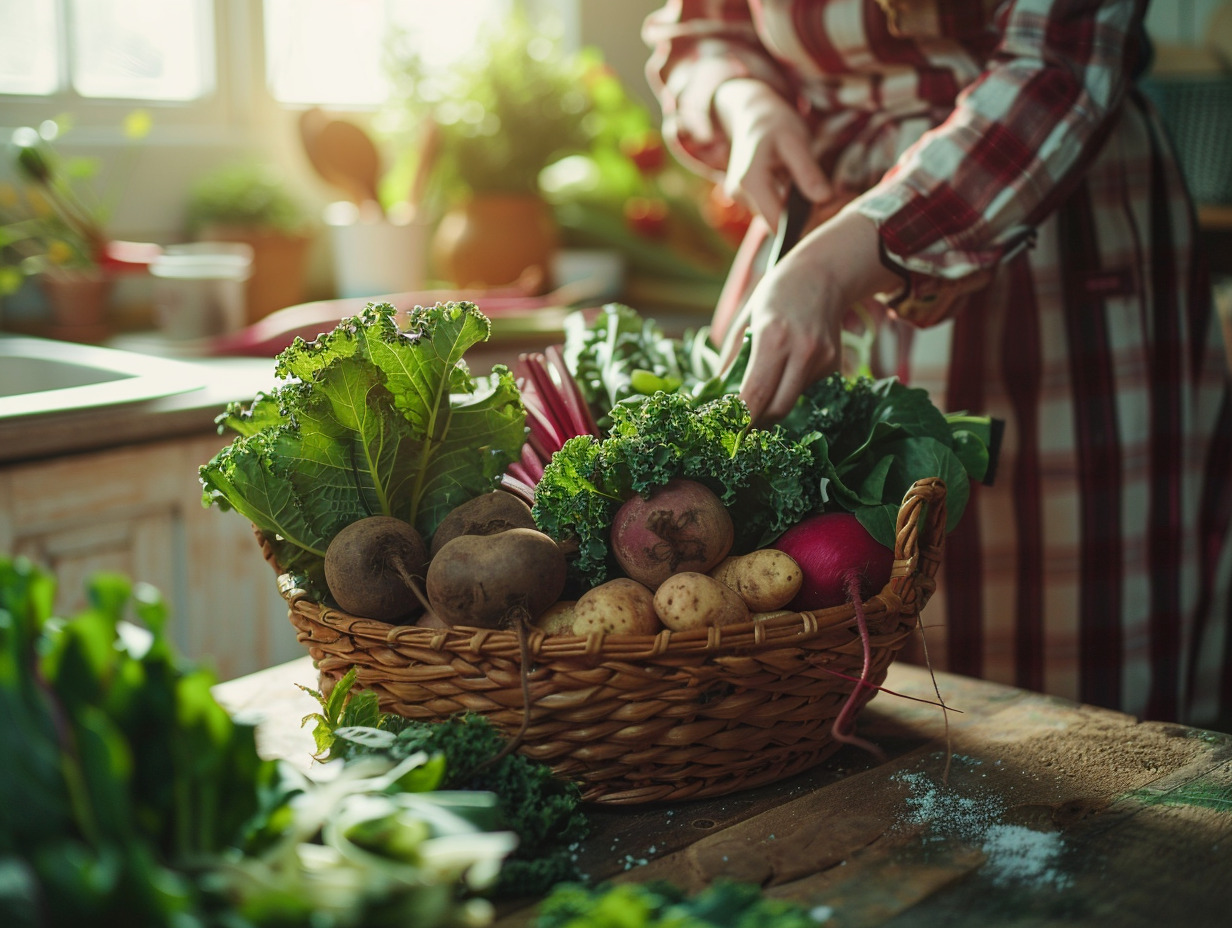
Maximizing the nutritional benefits of winter vegetables in your dishes
Winter vegetables, treasures of nutritional benefits, are essential for <strong boosting the immune system during the coldest months. Rich in fiber, vitamins, and minerals, they are a significant asset for health, providing essential nutrients while being low in calories. Cabbages, spinach, and beets, among others, stand out for their ability to strengthen the body’s natural defenses. Incorporate these vegetables into nutritious and varied recipes such as soups, stews, gratins, or stir-fries to benefit from their health virtues while delighting the taste buds.
The preparation of vegetables directly influences their nutrient content. Favor gentle cooking methods such as steaming or braising, which best preserve the nutritional qualities of the vegetables. Combining winter vegetables with sources of healthy fats, like olive oil or seeds, promotes the absorption of fat-soluble vitamins such as vitamins A, D, E, and K. Low cooking temperatures help maintain the integrity of essential nutrients and avoid the degradation of heat-sensitive compounds.
A diet should include a variety of winter vegetables, with regular consumption contributing to a balanced diet. Recipes that use these vegetables open a wide range of culinary possibilities, inviting exploration of varied flavors and textures. Carrots, sources of beta-carotene, become sweet in a purée, while Jerusalem artichokes, rich in inulin, add a nutty note to stews. Don’t forget legumes, like lentils or chickpeas, which complement the intake of proteins and fibers. Winter vegetables not only satisfy the senses but also contribute fully to robust health and overall well-being.